
Cosmetic Manufacturing
Procedures Used by CLS
CLS uses a structured, GMP-oriented manufacturing procedure designed to ensure that every cosmetic batch is produced reproducibly, hygienically and in compliance with EU cosmetic requirements.

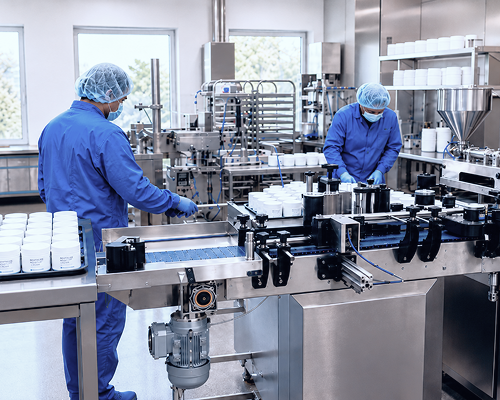
Cosmetic Labsolutions manufactures cosmetic products according to controlled production procedures based on ISO 22716 / Cosmetic GMP principles. Each product is produced according to a defined manufacturing instruction, including raw material preparation, weighing, processing parameters, in-process controls, filling and final batch release.
The process typically includes:
Formula and production review before manufacturing
Before production starts, the approved formulation is checked for technical feasibility, raw material availability, regulatory suitability, processing requirements, packaging compatibility and required testing.
Raw material control
All raw materials are checked against the formulation, INCI requirements and supplier documentation. Relevant documents such as SDS, CoA, allergen information, IFRA certificates or microbiological data are reviewed where required.
Controlled weighing and batch preparation
Raw materials are weighed according to the approved batch formula. Each weighing step is documented to ensure traceability and batch reproducibility.
Phase preparation
Depending on the product type, oil phase, water phase, active phase and fragrance phase are prepared separately. Temperature-sensitive ingredients are added at controlled temperatures to protect their stability and performance.
Emulsification and homogenisation
For creams, lotions, conditioners and emulsions, CLS uses controlled heating, stirring and high-shear homogenisation to create a stable emulsion structure. Parameters such as temperature, mixing speed, homogenisation time and cooling profile are adjusted to the specific formulation.
Low-temperature processing where required
For sensitive actives such as peptides, retinal, PDRN, exosomes, botanical extracts or probiotics-derived ingredients, CLS can apply reduced-temperature processing and late-stage addition to avoid unnecessary degradation.
In-process controls
During production, key parameters are checked, such as appearance, odour, colour, pH, viscosity, homogeneity, texture and filling behaviour. Adjustments are only made within the validated formulation and process limits.
Filling and packaging
Products are filled into suitable primary packaging such as jars, bottles, tubes or airless pumps. Filling parameters are selected according to viscosity, packaging type and product sensitivity. Packaging is checked for suitability, cleanliness and filling compatibility.
Batch documentation and traceability
Each production batch is documented with batch numbers, raw material lots, processing steps, weighing records, in-process checks and release information. This allows full traceability from raw materials to finished product.
Quality control and batch release
Before release, the finished product is checked against defined specifications. Depending on the product, this may include pH, viscosity, appearance, odour, weight/fill volume, microbiological testing, stability testing and packaging compatibility checks.
Ready to see your product come to life?
Tell us about your product concept, your target volumes, and any packaging or sustainability requirements.
We will come back with a clear picture of what is possible, what it costs, and how long it takes.
See how it works
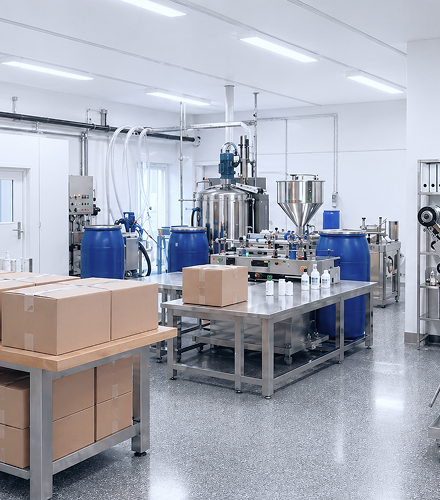
Summary
Our manufacturing procedures combine cosmetic GMP, technical formulation expertise and controlled batch documentation.
From raw material verification and precision weighing to emulsification, homogenisation, filling and final quality release, every production step is carried out according to defined specifications.
This ensures that each cosmetic product is manufactured reproducibly, safely and in line with EU cosmetic compliance requirements.